
Imagine sitting by a gentle campfire, listening to the soft crackle of burning wood, while placing colorful blocks onto a grid. No timers. No aggressive music. No enemies rushing toward you. Just you, the blocks, and a peaceful sense of accomplishment.
That is the magic of Relaxing Cubes and Campfire, a delightful puzzle game developed by GamePush. With its soothing audio design and simple yet engaging block-placement mechanics, this title proves that games do not need explosions or high-speed action to be satisfying.
This guide covers everything you need to know about Relaxing Cubes and Campfire: how to play, strategies for high scores, why the audio design matters, and who will enjoy this gentle puzzle experience.
What Is Relaxing Cubes and Campfire? An Overview
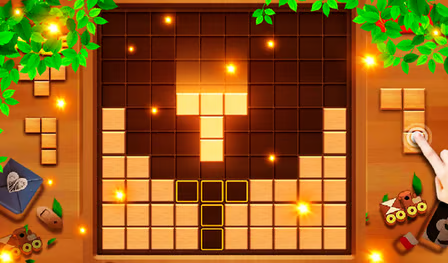
Relaxing Cubes and Campfire is a block-placement puzzle game with a focus on tranquility. The core mechanic is simple: you receive blocks of various shapes, place them on a grid, and try to form complete horizontal or vertical lines. When a line is fully filled with blocks, it disappears, earning you points and freeing up space for more blocks.
The game continues until you run out of space to place new blocks. There is no time limit, no move limit, and no penalty for taking your time. You can stare at the grid for as long as you like, considering your options, planning your next placement, and enjoying the relaxing campfire sounds.
This is not a game about speed or reaction time. It is about careful planning, spatial awareness, and finding peace in repetitive, meditative gameplay.
Why Relaxing Cubes and Campfire stands out:
- No time pressure: Play at your own pace
- Calming audio: Delightful campfire sounds create a peaceful atmosphere
- Simple mechanics: Anyone can learn in seconds
- Suitable for all ages: Children, adults, and seniors alike
- Endless replayability: Every game is different
- No download required: Play directly in your browser
How to Play: Core Gameplay Mechanics
The rules of Relaxing Cubes and Campfire are straightforward. You can learn them in under a minute, but mastering them takes practice.
The Playing Field
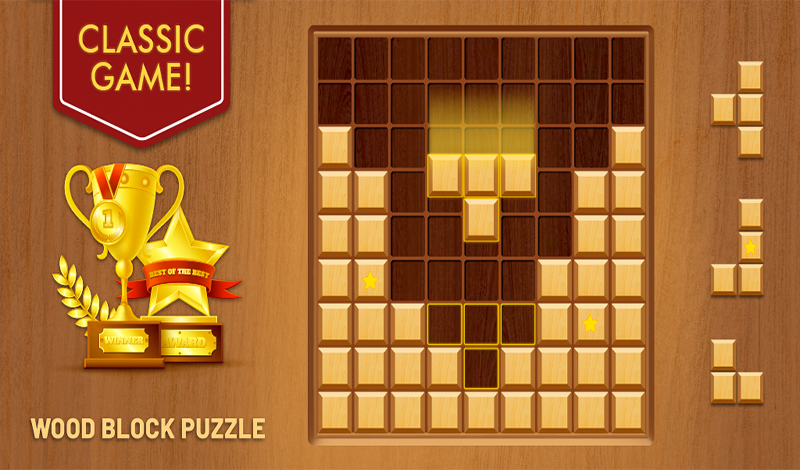
The game presents you with a grid—typically 8×8 or 10×10, depending on the version. This grid is your canvas. You will fill it with blocks of various shapes.
The Blocks
At the bottom or side of the screen, you will see three blocks (sometimes more, depending on the version). These blocks come in different shapes: squares, L-shapes, lines of three, zigzags, and other Tetris-like configurations.
You must place each block onto the grid. Once placed, the block cannot be moved. The next set of blocks appears after you place the current one.
Forming Lines
The goal is to create complete horizontal lines or complete vertical lines across the grid. When every cell in a line is filled with a block, that line disappears. All blocks above the cleared line drop down, potentially creating chain reactions.
Each cleared line earns you points. Some versions award bonus points for clearing multiple lines with a single block placement.
Game Over
The game ends when you have no space left to place the current block. At that moment, your final score is displayed, and you can choose to start a new game.
Scoring
Points are awarded primarily for clearing lines. The more lines you clear with a single placement, the higher your score multiplier. Some versions also award points simply for placing blocks, but line clears are the main source of points.
Pro tip: Clearing four lines at once (a “Tetris” in Tetris terms) is much more valuable than clearing four separate lines one at a time. Try to set up your grid so that one block can complete multiple lines simultaneously.
The Relaxing Element: Campfire Sounds and Visual Design
The title “Relaxing Cubes and Campfire” is not just marketing copy. The game genuinely prioritizes relaxation through its audio and visual design.
The Campfire Audio
Unlike most puzzle games that feature upbeat, repetitive chiptune music, Relaxing Cubes and Campfire offers something different: the gentle sound of a crackling campfire. This audio loop is designed to be soothing rather than stimulating. It lowers your heart rate rather than raising it.
The campfire sounds are subtle. They do not demand your attention. They simply exist in the background, creating a warm, safe atmosphere. For many players, this audio design is the game’s most distinctive feature.
Why audio matters: Studies have shown that natural sounds (fire, water, wind) reduce stress and improve cognitive performance. By incorporating campfire sounds, Relaxing Cubes and Campfire transforms from a simple puzzle game into a genuine relaxation tool.
Visual Aesthetic
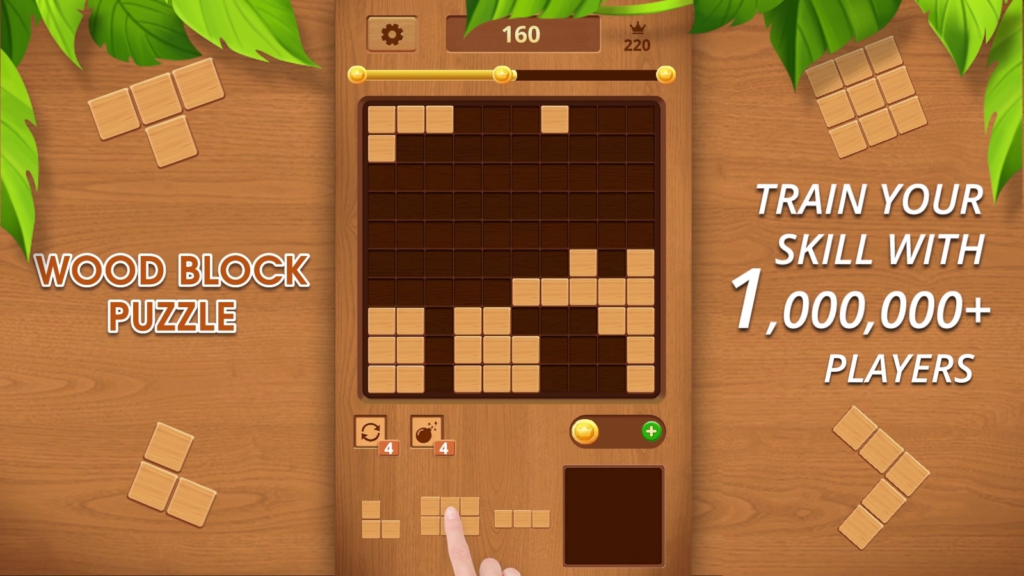
The visuals match the audio: warm, soft, and uncomplicated. The blocks are typically rendered in gentle, muted colors—earth tones, soft blues, warm oranges. There are no flashing lights, no particle effects, no visual chaos.
The grid is clearly defined but not harsh. The background may feature simple nature imagery or a gradient that evokes twilight. Nothing about the visual design demands your attention. It simply provides a comfortable space for your puzzle-solving.
No Stress, No Pressure
Many puzzle games add timers, move limits, or increasing speed to create tension. Relaxing Cubes and Campfire explicitly rejects these mechanics. There is no countdown clock. There is no limit on how long you can take per move. You can walk away from the game for an hour and return to the exact same state.
This lack of pressure is what makes the game accessible to players who find traditional puzzle games frustrating. Elderly players, young children, and anyone recovering from cognitive issues can play without anxiety.
Strategies for High Scores
While Relaxing Cubes and Campfire is designed for relaxation, some players enjoy optimizing their scores. If you want to achieve higher points, these strategies will help.
Beginner Strategies
1. Keep the grid as flat as possible. Avoid creating tall piles of blocks in one area. A flat grid offers more placement options and makes it easier to complete lines.
2. Prioritize line clears over individual block placement. Always ask yourself: “Does placing this block create a line? If not, is there a placement that will set up a future line?”
3. Fill from the bottom up. When you have a choice, place blocks in the lowest available rows. This reduces the chance of creating gaps that cannot be filled.
4. Pay attention to the upcoming blocks. Most versions show you the next block (or next three blocks). Plan your current placement based on what is coming.
5. Do not rush. There is no timer. Take 30 seconds to study the grid before each placement if you need to.
Advanced Strategies
1. Create “wells” for line pieces. A well is an empty column that allows a straight line block to drop deep into the grid. This technique, borrowed from Tetris, allows you to clear lines from low positions.
2. Set up multiple line clears. Try to arrange the grid so that one block can clear two, three, or even four lines at once. This requires looking ahead and saving space for the perfect block.
3. Avoid creating “holes.” A hole is an empty cell surrounded on all sides (or above) by filled cells. Holes are very difficult to fill because blocks cannot pass through filled cells. If you see a hole forming, fill it immediately.
4. Learn the block shapes. Each block shape fits into certain patterns. A line block is good for wells. An L-block is good for corners. A square block is good for filling 2×2 gaps. Recognizing which shape you need in the moment comes with practice.
5. Sacrifice short-term points for long-term setup. Sometimes it is better to place a block that does not clear a line now but creates a perfect setup for a four-line clear later. Patience pays off.
Recovery Strategies (When the Grid Is Messy)
If your grid becomes chaotic, do not give up. Use these techniques to recover:
- Focus on clearing one line at a time. Do not worry about multiple line clears. Just get any line cleared to create space.
- Use straight line blocks to dig down. If you have a column with gaps, drop a straight block into that column.
- Clear from the top down when possible. A cleared line at the top affects everything below it. A cleared line at the bottom only affects itself.
- Accept that some games are unwinnable. Every game ends eventually. The goal is to survive as long as possible, not to play forever.
Who Is Relaxing Cubes and Campfire For? Audience and Suitability
Relaxing Cubes and Campfire has perhaps the broadest audience of any puzzle game on the market. It is genuinely suitable for all ages and skill levels.
| Player Type | Why They Will Enjoy It |
|---|---|
| Casual gamers | No time pressure, simple mechanics, playable in short bursts |
| Children (ages 5+) | Colorful blocks, no violence, easy to understand |
| Seniors | Cognitive exercise without stress, gentle on eyes and ears |
| Anxiety sufferers | Calming audio, no timers, no failure states beyond game over |
| Puzzle enthusiasts | Strategic depth emerges despite simple rules |
| Anyone needing a break | Five minutes of block placing reduces mental fatigue |
| Tetris fans | Familiar mechanics with a relaxation-focused twist |
Is It Suitable for Young Children?
Absolutely. Relaxing Cubes and Campfire contains no violence, no inappropriate themes, no scary elements, and no reading requirements (beyond basic number recognition). Children as young as five can understand the concept of placing blocks to fill lines.
The lack of time pressure is especially beneficial for young children, who may need extra time to process spatial relationships. The campfire sounds are soothing rather than overstimulating.
Is It for Hardcore Gamers?
Not primarily. Relaxing Cubes and Campfire does not offer leaderboards, achievements, or competitive elements. It is designed for relaxation, not adrenaline. However, hardcore gamers seeking a break from intense titles may appreciate the game’s calming qualities.
Accessibility Features
The game is highly accessible:
- Large, clearly defined blocks
- High-contrast colors (in most versions)
- No fast reactions required
- No audio cues required for gameplay (the campfire sounds are optional)
- Works with mouse, touch, or (in some versions) keyboard
Players with motor disabilities may need to use touch or adaptive pointing devices, but the game’s lack of time pressure makes it feasible.
Relaxing Cubes and Campfire vs. Other Block Puzzle Games
How does Relaxing Cubes and Campfire compare to other popular block-placement games?
| Feature | Relaxing Cubes and Campfire | Tetris | 1010! | Block Puzzle |
|---|---|---|---|---|
| Time pressure | None | Increases with level | None | None |
| Audio design | Campfire sounds | Iconic music | Generic | Generic |
| Grid size | 8×8 or 10×10 | Variable (10×20 typical) | 10×10 | 8×8 |
| Blocks per turn | 3 (fixed set) | 1 (falling) | 3 (fixed set) | 3 (fixed set) |
| Line clearing | Full lines only | Full lines only | Full lines only | Full lines only |
| Stress level | Very low | Moderate to high | Low | Low |
| Relaxation focus | Yes (primary) | No | No | No |
Relaxing Cubes and Campfire’s main differentiator is its explicit focus on relaxation. The campfire audio, warm visuals, and complete lack of time pressure make it a meditation tool as much as a game.
Why Play Relaxing Cubes and Campfire in Your Browser?
Relaxing Cubes and Campfire offers several advantages as a browser-based game:
Instant Access
No download, no installation, no account creation. Click the link and start placing blocks within seconds.
Cross-Platform Compatibility
The game works on Windows, Mac, Chromebook, iOS, Android, and Linux. The same link works everywhere.
No Storage Space Required
The game runs entirely in your browser. It does not take up space on your hard drive or mobile device.
Completely Free
The full game is free to play. No in-app purchases are required to access any features.
Ad-Supported but Fair
The embedded version may show short ads, but these do not interrupt active gameplay. You can typically close ads after a few seconds.
Progress Does Not Need Saving
Since each game is a fresh session with a random (or predetermined) block sequence, there is no long-term progress to save. You simply play until you lose, then start again. This makes it perfect for quick breaks.
Frequently Asked Questions (FAQs)
1. Is Relaxing Cubes and Campfire really free to play?
Yes, Relaxing Cubes and Campfire is completely free. You can play the full game without spending any money. The embedded version may include occasional ads, but these are brief and do not block core gameplay.
2. Do I need to download anything to play Relaxing Cubes and Campfire?
No download or installation is required. Relaxing Cubes and Campfire is an HTML5 browser game that runs directly in your web browser. Just click and play.
3. Can I play Relaxing Cubes and Campfire on my phone or tablet?
Yes. The game is fully compatible with iOS and Android mobile devices. It uses touch controls optimized for smaller screens.
4. How do the campfire sounds work?
The game plays a gentle, looping audio track of a crackling campfire. This sound is designed to be soothing and non-distracting. You can mute the audio using your device’s volume controls or the game’s mute button (if available). No gameplay elements rely on audio cues.
5. Is there an end to Relaxing Cubes and Campfire?
The game does not have a traditional “final level” with credits. Instead, you play until you run out of space to place blocks. Each game is a fresh session with a new random block sequence. There is no “beating” the game—only achieving higher scores.
6. Is this game suitable for people with anxiety?
Yes. Many players report that the combination of simple block placement and calming campfire sounds helps reduce anxiety. The lack of time pressure and the inability to “fail” (beyond a gentle game over) make it a low-stress experience. However, individual responses vary—try the game for a few minutes to see how it affects you.
7. What is the highest possible score?
There is no theoretical maximum score. Your score depends on how long you can keep the grid clear and how many line clears you achieve. Skilled players can keep a game going for 30 minutes or more. Some versions may have a score cap, but this is rare.
8. Can I play Relaxing Cubes and Campfire offline?
No. The game requires an internet connection to load initially. Once loaded, a stable connection is needed for ad serving (in the ad-supported version). Some downloadable versions may exist, but the browser version requires a connection.
9. Does Relaxing Cubes and Campfire have different difficulty levels?
Most versions do not include explicit difficulty settings because the game’s difficulty emerges naturally from the random block sequence. However, some versions may offer grid size options (smaller grids are harder because they fill faster) or alternate block sets.
10. Is there a multiplayer mode?
No. Relaxing Cubes and Campfire is a single-player experience. The focus is on personal relaxation and achievement, not competition. Some players compare high scores informally, but there is no built-in leaderboard.
11. How do I know when the game is over?
The game ends when you are given a block that you cannot place anywhere on the grid. At that moment, the game typically displays your final score and offers a button to start a new game. There is no penalty or negative feedback—just a gentle end to that session.
12. Can I save my game and resume later?
Because each game is a fresh session with a random block sequence, there is typically no save feature. You play until you lose, then start a new game. Some versions may offer a “pause” button that freezes the game indefinitely, but closing the browser will end the session.
The Therapeutic Value of Relaxing Games
In recent years, game designers have recognized that not all players want excitement and challenge. Some players want peace, tranquility, and a gentle cognitive workout.
Relaxing Cubes and Campfire fits into a growing genre sometimes called “wellness games” or “cozy games.” These titles prioritize low stress, soothing aesthetics, and player autonomy over high scores and competition.
Benefits reported by players:
- Reduced anxiety during gameplay
- Improved focus after short sessions
- A sense of accomplishment without pressure
- Better sleep when played before bed
- A distraction from negative thought patterns
While Relaxing Cubes and Campfire is not a substitute for professional mental health treatment, it can serve as a useful tool for managing everyday stress.
Recommended usage: Play for 10-15 minutes during a work break, before a challenging task, or in the evening to transition from “doing” mode to “resting” mode.
Conclusion: Find Your Peace, One Block at a Time
Relaxing Cubes and Campfire proves that puzzle games do not need to be stressful to be engaging. The simple block-placement mechanics are satisfying. The gentle campfire audio is genuinely calming. The complete lack of time pressure allows you to play exactly how you want—fast or slow, strategic or casual.
Whether you are a child learning spatial reasoning, an adult unwinding after a long day, or a senior keeping your mind active, Relaxing Cubes and Campfire offers a welcoming space.
So find a comfortable chair. Take a deep breath. Listen to the crackle of the fire. And start placing those blocks. Your peaceful puzzle awaits.