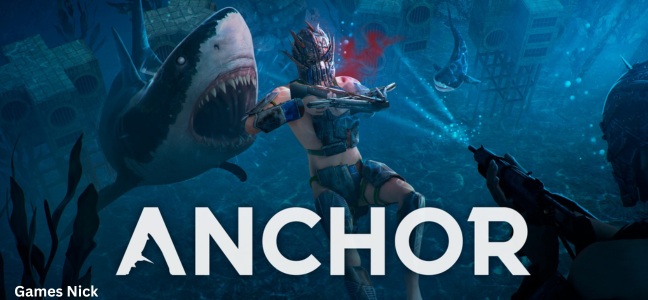

Dive Into a Mysterious and Beautiful Underwater World. Welcome to an unforgettable underwater survival adventure where exploration, discovery, and survival come together in a stunning ocean environment. Dive deep into a vibrant and mysterious sea filled with hidden secrets, breathtaking visuals, and endless possibilities.
Developed by Ultra Games Entertainment Private Limited, Underwater Survival transports you beneath the waves into a world of wonder and danger. You are not just a visitor—you are a survivor. You must navigate treacherous waters, gather resources, avoid predators, and uncover the mysteries hidden in the deep.
This comprehensive guide covers everything you need to know about Underwater Survival: gameplay mechanics, survival systems, exploration tips, resource management, and strategies for thriving in this beautiful but unforgiving underwater world.
What Is Underwater Survival? An Overview
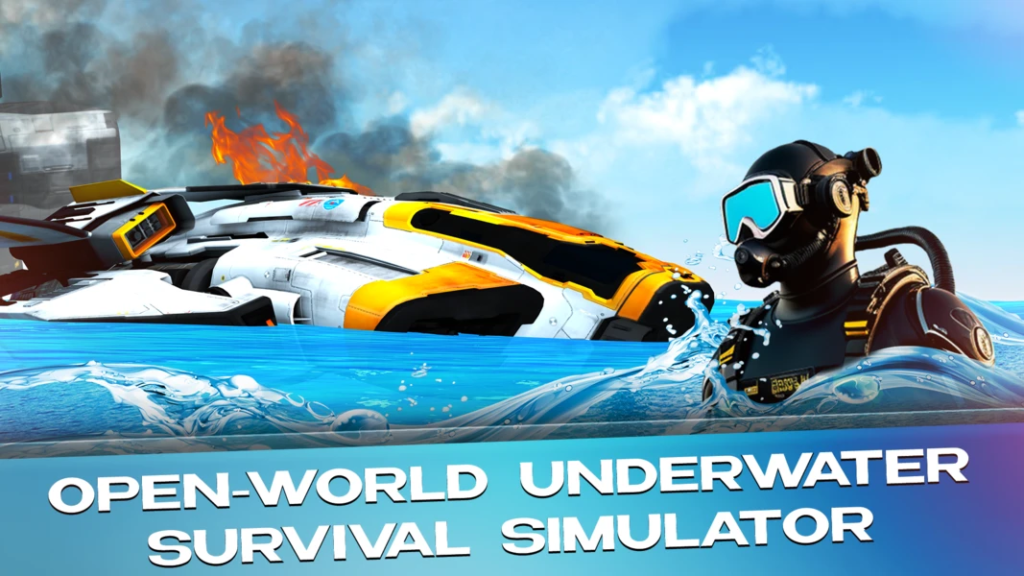
Underwater Survival is an open-world survival exploration game set entirely beneath the ocean’s surface. Unlike traditional survival games that take place on land, this title immerses you in a stunning aquatic environment filled with coral reefs, sunken ships, underwater caves, and a diverse ecosystem of marine life.
The game blends multiple genres:
- Survival mechanics – Manage oxygen, health, hunger, and temperature
- Exploration – Discover hidden locations and secrets across a vast underwater map
- Resource gathering – Collect materials to craft tools, equipment, and shelter
- Base building – Construct underwater habitats to store resources and rest
You are not given a detailed map or a quest log. You are simply dropped into the ocean with minimal equipment. What you do next—where you go, what you build, how you survive—is entirely up to you.
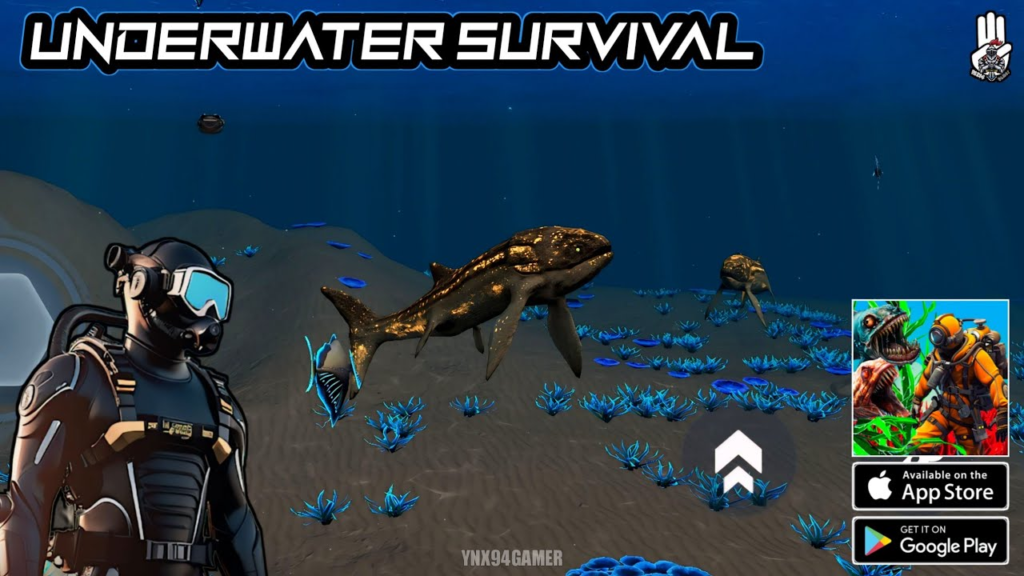
Why Underwater Survival stands out:
- Unique underwater setting – Explore vibrant coral reefs and dark abysses
- Deep survival systems – Multiple stats to manage (oxygen, health, hunger, temperature)
- Beautiful visuals – Stunning ocean environments and marine life
- Open-ended gameplay – No linear story; create your own adventure
- Crafting and base building – Build habitats and upgrade equipment
- Play anywhere – Browser-based with no download required
Core Gameplay Mechanics
Movement and Controls
The game uses simple but responsive controls:
| Action | Control (Desktop) | Control (Mobile) |
|---|---|---|
| Move | WASD keys or arrow keys | Touch drag |
| Swim up | Spacebar or W | Swipe up |
| Swim down | Left Ctrl or S | Swipe down |
| Interact | E key or left mouse button | Tap |
| Inventory | I key or Tab | Tap inventory icon |
| Crafting | C key | Tap crafting icon |
Movement is smooth and fluid, simulating swimming through water. You can move in any direction—forward, backward, up, down, left, right—giving you true 3D freedom.
Survival Stats
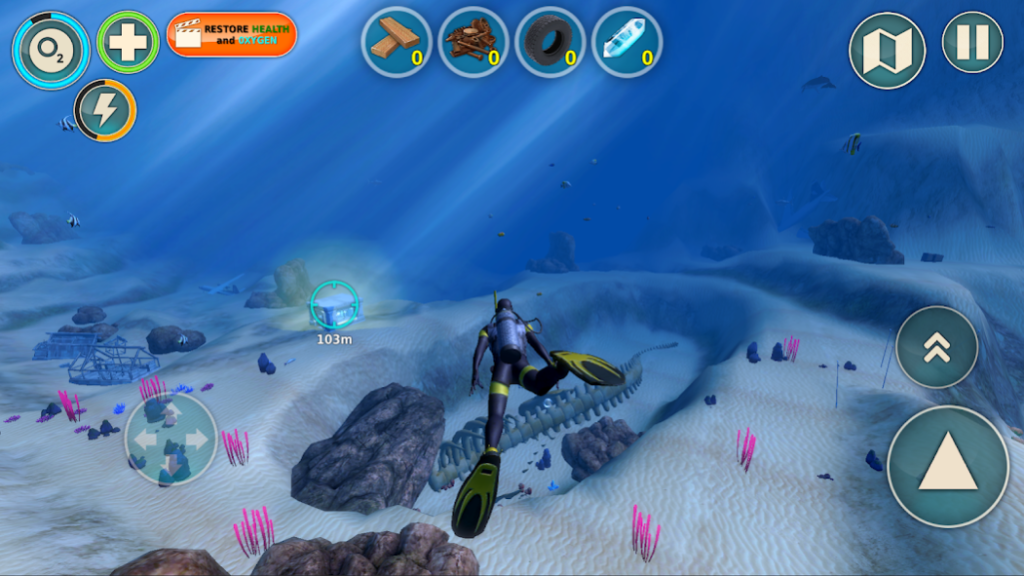
Your character has several stats that require constant attention:
Oxygen (Primary)
The most critical stat. While underwater, your oxygen level steadily decreases. When it reaches zero, you begin taking damage and will eventually drown. You can replenish oxygen by surfacing (reaching the top of the water) or by finding oxygen bubbles or air pockets in underwater caves.
Health
Damage from predators, environmental hazards, or oxygen deprivation reduces health. Health regenerates slowly over time when you are safe and not taking damage. Instant healing comes from crafted medical items or rare resources.
Hunger
Your character needs to eat to maintain energy. Hunger depletes over time. If it reaches zero, your health begins to drop. Food can be gathered from the environment (fish, seaweed, fruits from underwater plants) or crafted.
Temperature
Deep water and certain biomes (ice caves, deep trenches) are cold. Cold temperatures drain your hunger faster and eventually damage your health. You can manage temperature by wearing appropriate gear, staying in warmer waters, or building heat sources in your base.
Resources and Gathering
The underwater world is filled with resources you can gather:
| Resource Type | Examples | Uses |
|---|---|---|
| Basic materials | Stone, sand, seaweed | Building, basic tools |
| Organic materials | Fish, coral, shells | Food, crafting components |
| Metals | Scrap metal, copper, iron | Advanced tools, equipment |
| Gems | Crystals, pearls | Crafting, trading |
| Rare resources | Ancient artifacts, buried treasure | Unique items, story progression |
To gather a resource, swim close to it and press the interact button. Some resources require specific tools (e.g., a pickaxe for metal deposits).
Crafting System
Resources are used to craft items through the game’s crafting system:
Basic Tools:
- Stone pickaxe – Gather stone and metal
- Fishing spear – Catch fish for food
- Knife – Cut seaweed and coral
- Torch – Provide light in dark areas
Equipment:
- Flippers – Increase swim speed
- Oxygen tank – Extend underwater breathing time
- Wet suit – Protect against cold temperatures
- Dive light – See in the darkest depths
Structures:
- Oxygen pump – Create an air bubble in an underwater base
- Storage container – Store gathered resources
- Bed – Save your spawn point
- Crafting table – Unlock advanced recipes
Base Building
You are not meant to swim forever. Eventually, you need a home—an underwater base where you can store resources, craft equipment, and rest safely.
Base building steps:
- Find a suitable location (flat terrain, near resources)
- Gather building materials (stone, metal, glass)
- Construct a foundation
- Add walls, roof, and doors
- Install functional items (oxygen pump, storage, crafting table)
- Decorate (optional)
Bases provide safety from predators (most cannot enter buildings), a place to store items (protecting them from loss), and a respawn point if you die.
Exploration and Discovery
The underwater world is vast and filled with secrets. Different biomes offer unique challenges and rewards:
| Biome | Characteristics | Resources | Dangers |
|---|---|---|---|
| Coral Reef | Shallow, colorful, abundant life | Fish, coral, seaweed | Small predators (eels, lionfish) |
| Kelp Forest | Dense vegetation, moderate depth | Kelp, shells, small fish | Medium predators |
| Sunken Ruins | Ancient structures, deep | Artifacts, gems, rare metals | Traps, guardians |
| Deep Trench | Very deep, dark, cold | Rare minerals, unique creatures | Giant predators, cold, darkness |
| Ice Caves | Freezing, labyrinthine | Crystals, frozen resources | Cold, ice worms |
| Shipwrecks | Man-made structures | Scrap metal, tools, loot | Dark, confined spaces |
Exploring new biomes requires better equipment. You cannot survive the Deep Trench without an upgraded oxygen tank and a dive light.
Predators and Threats
The ocean is not empty. Many creatures see you as prey:
| Threat | Behavior | Avoidance Strategy |
|---|---|---|
| Sharks | Aggressive, patrol areas | Avoid their territory, swim away fast |
| Eels | Ambush from holes | Stay away from dark crevices |
| Jellyfish | Sting on contact | Swim around them |
| Giant Squid | Deep water only | Stay out of its territory |
| Piranha | Swarm attacks | Do not bleed in the water |
| Cold | Environmental | Wear warm gear, stay in warm biomes |
| Darkness | Psychological, disorienting | Always carry a light source |
Some predators can be avoided by stealth (swimming slowly, staying out of sight). Others require combat (using crafted weapons).
Day and Night Cycle
The game features a realistic day/night cycle. Daytime is safer—predators are less active, and visibility is good. Nighttime is dangerous—many predators become more aggressive, and you cannot see without artificial light.
Plan your activities accordingly. Explore during the day. Craft, build, and rest at night.
Death and Respawning
If your health reaches zero, you die. You lose some resources (those not stored in a base) and respawn at your last saved location (usually your bed or starting point). You can retrieve your lost items from where you died, but be careful—the cause of your death may still be there.
Strategies for Success
Beginner Strategies
1. Prioritize oxygen management. Never let your oxygen drop below 25%. If you see your oxygen getting low, surface immediately. Death by drowning is the most common beginner mistake.
2. Gather everything at first. You do not know what resources will be useful later. Pick up stone, seaweed, shells, fish—everything. You can always drop items later if inventory fills.
3. Build a base early. Even a small shelter with an oxygen pump transforms survival. You can store resources safely and respawn nearby.
4. Stay in shallow waters initially. The coral reef biome has abundant resources and relatively few predators. Master basic survival there before venturing deeper.
5. Learn to recognize predators. Each predator has distinct silhouettes and movement patterns. Learn them. Avoidance is better than fighting.
6. Always carry a light source. Even if you plan to return before night, carry a torch or dive light. Night falls faster than you expect.
Advanced Strategies
1. Upgrade oxygen capacity first. The basic oxygen tank allows only a minute or two underwater. Upgraded tanks extend this to 5, 10, or even 15 minutes—enabling exploration of deep biomes.
2. Create multiple bases. One base is convenient, but multiple bases scattered across the map let you explore far from your starting point without risking long swims back.
3. Use beacons to mark locations. If the game allows, place beacons or markers at important locations (resource deposits, biome entrances, shipwrecks). This prevents disorientation.
4. Learn the map. The world is fixed, not randomly generated. Explore methodically, mapping biomes and landmarks in your mind (or on paper). Over time, you will navigate without orientation tools.
5. Farm resources systematically. Identify locations where rare resources spawn. Return to these locations regularly. Set up small outposts nearby.
6. Prepare for expeditions. Before exploring a dangerous biome, stock up: extra oxygen tanks, food, water, medical supplies, and light sources. Do not go underprepared.
Expert Strategies
1. Breed fish for food. Some versions allow you to capture and breed fish in contained environments. This creates a sustainable food source, eliminating the need to hunt.
2. Build oxygen pipelines. Advanced base building may allow connecting oxygen pumps with pipes, creating “oxygen highways” across the map.
3. Trap predators. Rather than avoiding sharks, craft traps. Once trapped, you can harvest their resources (shark teeth, fins) without combat risk.
4. Optimize base location. The perfect base location balances: proximity to multiple biomes, abundant resources, natural defenses (cliffs, caves), and aesthetic appeal.
5. Speedrun strategies. For players who want to “beat” the game quickly (if there is an end goal), memorize the locations of key resources and beeline to them. Ignore distractions.
Frequently Asked Questions (FAQs)
1. Is Underwater Survival really free to play?
Yes, Underwater Survival is completely free. You can play the full game without spending any money. The embedded version may include occasional ads, but these appear between sessions or on game over, not during active gameplay.
2. Do I need to download anything to play?
No download or installation is required. Underwater Survival is an HTML5 browser game that runs directly in your web browser. Just click and play.
3. Can I play on my phone or tablet?
Yes. The game is fully compatible with iOS and Android mobile devices. It uses touch controls optimized for smaller screens. The default orientation is landscape (800×600 resolution).
4. How do I breathe underwater?
Your character has an oxygen meter. It depletes over time while underwater. To replenish oxygen, swim to the surface (the top of the water). You can also find oxygen bubbles from certain plants or air pockets in caves. Later, you can craft oxygen tanks that extend your breath-holding time.
5. How do I build a base?
To build a base:
- Gather building materials (stone, metal, etc.)
- Open the crafting menu (C key or inventory icon)
- Select “Structures” and choose a foundation
- Place the foundation on flat terrain
- Build walls, roof, and door
- Add functional items (oxygen pump, storage, bed)
Bases protect you from predators and let you save your progress.
6. What are the most dangerous predators?
The most dangerous predators are:
- Great White Shark – Fast, aggressive, high damage (avoid)
- Giant Squid – Found in deep trenches, tentacles grab you
- Electric Eel – Stuns you, leaving you vulnerable to drowning
- Piranha Swarms – Individually weak, overwhelming in groups
Each predator requires different avoidance or combat strategies. Learn them.
7. How do I survive the deep ocean?
Deep ocean survival requires:
- Upgraded oxygen tank – At least Tier 2 (5+ minutes)
- Dive light – To see in absolute darkness
- Cold protection – Wet suit or thermal gear
- Weapons – For giant predators
- Navigation tools – Beacons or map markers
Do not attempt deep ocean without all of the above.
8. Is there a story or ending?
The game is primarily open-ended survival. Some versions include narrative elements (discover lore about a lost civilization, find out why you are underwater), but the core experience is self-directed. You set your own goals: build the biggest base, explore every biome, collect all artifacts.
9. Can I play with friends?
The standard version of Underwater Survival is single-player only. Some adaptations may include multiplayer modes, but the embedded browser version is designed for solo play.
10. What are the best tools to craft first?
Prioritize:
- Stone pickaxe – For gathering metal (essential for upgrades)
- Fishing spear – For reliable food
- Oxygen tank (basic) – Extends underwater time
- Storage container – Organize resources
- Bed – Set spawn point
Do not waste resources on cosmetic or luxury items until basic survival is secure.
11. Why am I losing health even though I have oxygen?
Possible reasons:
- Hunger – Check your hunger meter; eat food
- Temperature – Cold water drains health; wear warm gear or move to warmer biome
- Poison – Some creatures inflict poison damage; requires antidote
- Bleeding – Wounds from predator attacks cause ongoing damage; bandage
Check all survival stats. The cause is usually not oxygen.
12. How do I get metal for advanced tools?
Metal comes from:
- Deposits – Shiny rocks on sea floor (requires pickaxe)
- Scrap metal – Found in shipwrecks
- Recycling – Break down unwanted metal items
- Trading – Some versions have NPCs who trade resources
Deep biomes have richer metal deposits but greater danger.
13. Can I tame or befriend sea creatures?
Some versions allow taming certain creatures (dolphins, small fish) for companionship or assistance. Taming typically requires finding a baby creature, feeding it, and raising it. Check your version’s features.
14. Does the game have an ending?
The answer depends on the version. Some Underwater Survival games have a story goal (find a way to escape the ocean, defeat a final boss, collect all artifacts). Others are purely sandbox—you survive until you choose to stop. Check your version’s objectives.
15. What is the scariest biome?
Players consistently name the Deep Trench as the scariest:
- Absolute darkness (light barely penetrates)
- Crushing pressure (visual effects, disorientation)
- Giant predators (squid, anglerfish)
- Strange sounds (unidentifiable noises)
- Feeling of vulnerability (no bottom visible)
Explore the Deep Trench only when fully prepared—and perhaps with a friend nearby in real life for moral support.
The Beauty and Terror of the Deep
Underwater Survival captures something unique: the simultaneous beauty and terror of the ocean. Sunlight filtering through coral reefs, schools of colorful fish, swaying kelp forests—these are breathtaking. But the dark abyss below, the shadow of a shark passing overhead, the realization that you are far from the surface and running low on oxygen—these are terrifying.
The game respects the ocean as both wonder and threat. It does not hold your hand. It expects you to learn, to adapt, to make mistakes, and to try again.
For players who love exploration, survival mechanics, and atmospheric worlds, Underwater Survival offers dozens of hours of content. The open-ended nature means you set your own goals. Maybe you want to build an underwater palace. Maybe you want to map every biome. Maybe you just want to see how deep you can go before the darkness overwhelms you.
Conclusion: The Depths Await
Underwater Survival invites you to explore a world that is both alien and familiar. The ocean covers 70% of our real planet, yet we know less about its depths than we do about the surface of Mars. This game taps into that mystery, that primal fear, that endless curiosity.
Dive in. Gather your first stone. Kill your first fish for food. Build your first shelter. Surface just as your oxygen meter flashes red. Craft your first oxygen tank and stay down longer. Venture into the kelp forest. Find the shipwreck. Avoid the shark. Discover the trench.
And when you finally stand—or swim—at the edge of the abyss, looking down into nothing, hearing sounds you cannot identify, feeling the pressure in your chest (in-game and in real life), you will understand why underwater survival games have a dedicated following.